
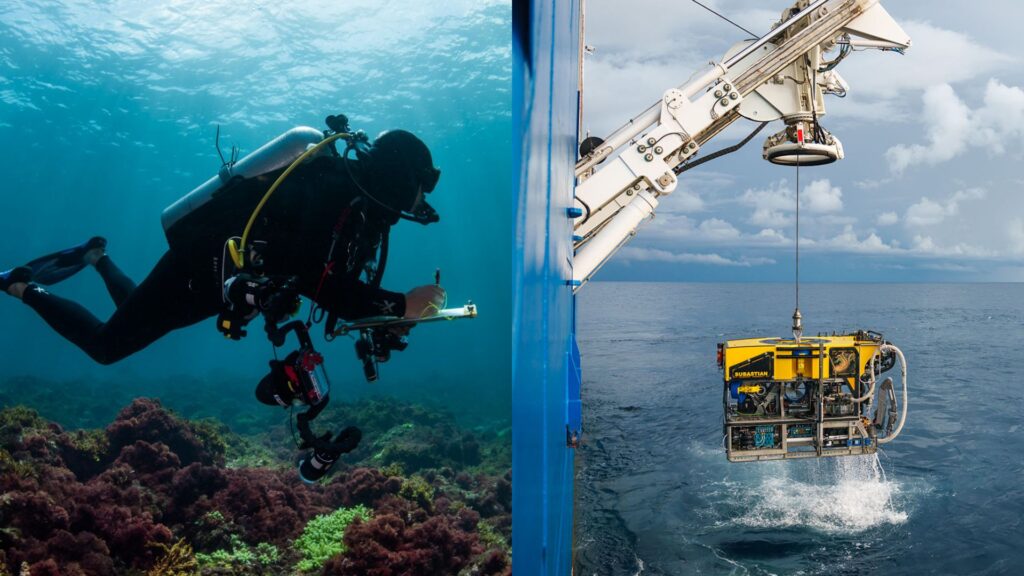
Artificial intelligence has quietly reshaped almost every technical industry over the last decade. Design offices now use AI-driven simulations, factories rely on machine vision, and asset owners depend on predictive models to reduce downtime. Underwater engineering has followed the same path. ROV surveys, high-definition underwater videography, and AI-assisted inspection software are now common tools in marine and offshore projects. In India, with expanding ports, coastal infrastructure, and offshore development, the push toward automation is accelerating. But underwater work does not happen in controlled environments, and the conditions beneath Indian waters expose the limits of automation very quickly.
The Rise of ROV Surveys and AI in Underwater Inspection
ROVs have become an essential part of modern underwater survey work. Globally, their use has grown steadily across offshore energy, ports, pipelines, and subsea infrastructure. According to MarketsandMarkets, the global ROV market is projected to reach approximately USD 1.8 billion by the early 2030s, driven largely by inspection and maintenance demand.
ROV surveys offer clear advantages. They allow rapid coverage of large areas, reduce diver exposure in hazardous zones, and provide consistent underwater videography that can be archived and reviewed repeatedly. When combined with AI, these systems can scan hours of footage and automatically flag corrosion patterns, marine growth, or structural irregularities. This has significantly reduced processing time and improved baseline documentation, especially during preliminary inspections and routine monitoring.
Where AI and ROVs Begin to Struggle
Despite these advances, AI-assisted underwater surveys are still limited by the quality and context of the data they receive. AI systems recognize patterns based on training data, and most available datasets are built around relatively clear offshore waters or standardized subsea assets. Indian conditions are rarely so cooperative. High turbidity, siltation, heavy biofouling, debris, and inconsistent construction practices introduce visual noise that reduces detection accuracy.
DNV has highlighted this challenge in multiple subsea integrity studies, noting that automated inspection systems show a higher rate of false positives and missed defects in low-visibility environments, often requiring diver verification before engineering decisions can be made.

In ports, rivers, and nearshore zones, underwater videography alone is often insufficient. When cameras lose clarity due to silt or marine growth obscures critical joints, AI output becomes suggestive rather than conclusive. This is a critical distinction when inspection findings directly influence repair planning or load reassessment.
Why Commercial Divers Still Matter
This is where diving services continue to play a central role. A commercial diver does not rely only on visual confirmation. He feels material loss, checks welds by touch, senses movement in members that should be rigid, and understands how currents and seabed interaction affect a structure over time. These tactile and situational inputs cannot be captured by sensors alone.
The International Marine Contractors Association continues to recognize diver-led inspection as essential for close visual inspection, confirmation of defects, and support for non-destructive testing, particularly in complex or restricted environments.
Divers also bring adaptability. If visibility drops, surfaces can be cleaned. If access is restricted, inspection methods can change immediately. In Indian waters, where conditions can shift within minutes, this flexibility often determines whether an inspection is completed accurately or needs to be repeated.
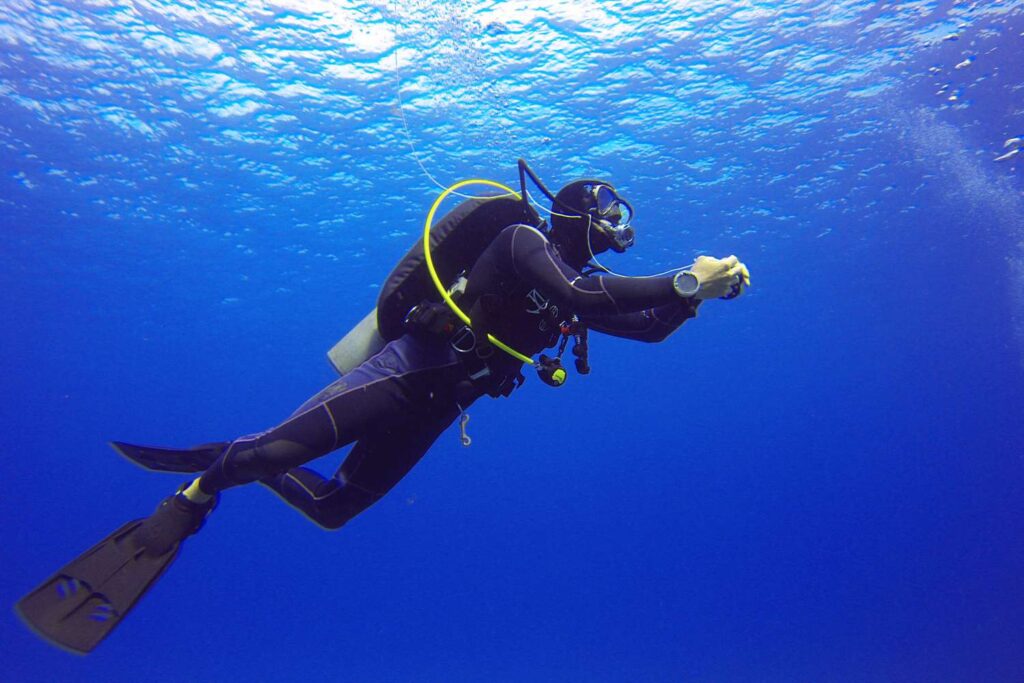
Artificial Intelligence has already taken over significant parts of planning, monitoring, and analysis across industries, and underwater engineering will continue to benefit from it. Automated change detection, long-term condition tracking, and predictive corrosion modeling are valuable tools. DNV’s work on digital assurance shows how AI improves consistency and trend analysis when applied correctly.
However, AI systems still depend on reliable ground truth. Without diver-verified inputs, automated assessments risk becoming assumptions layered on assumptions. This matters because accountability does not sit with software. Engineers and asset owners remain responsible for decisions based on inspection reports. In India, where many marine structures are decades old and documentation is incomplete, professional judgment carries significant weight.
An Integrated Future, Not a Replacement
The future of underwater survey is not diver versus ROV. It is integration. ROV surveys are ideal for reconnaissance, hazardous zones, repetitive monitoring, and large-area coverage. AI accelerates data processing and highlights areas of concern. Divers validate, interpret, and execute. Together, they turn underwater videography into reliable engineering information rather than raw footage.
For India’s growing marine infrastructure, this balanced approach is not optional. It is practical. Technology can extend reach and efficiency underwater, but judgment remains essential. And for now, that judgment still belongs to the diver.