
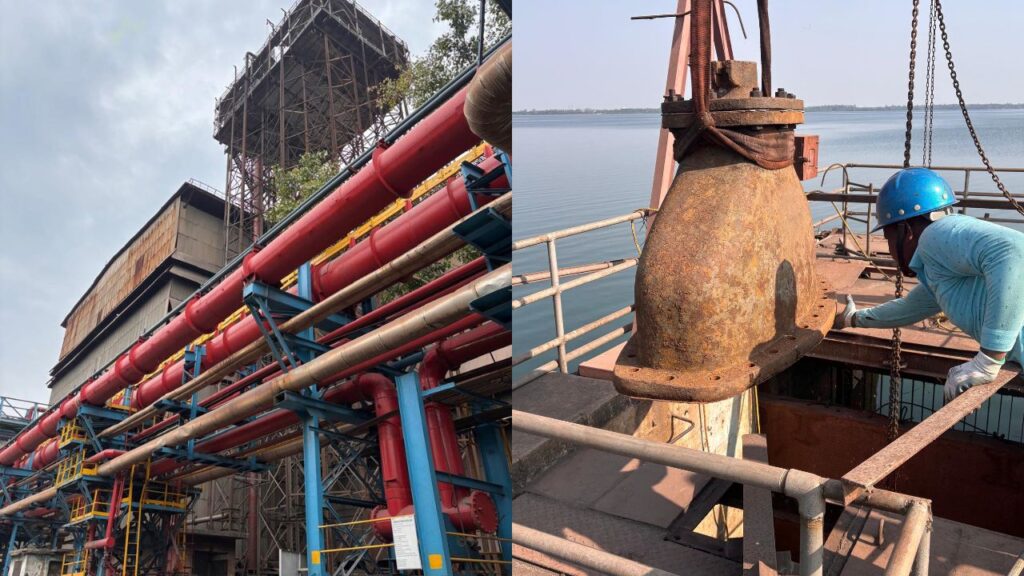
Why Steel Plants Still Depend on Commercial Divers
Why Steel Plants Still Depend on Commercial Divers in 2026 When people think of steel plants, they imagine massive furnaces, conveyor belts, and sparks flying. What most don’t picture is what’s happening underwater. But beneath all that heavy industry is a network of water systems that quietly keep everything running. And that’s where commercial divers still play a crucial role, even in 2026. With all the talk about automation, robotics, and AI, it’s easy to assume that underwater work has been taken over by machines. The reality is very different. Steel plants across India still rely heavily on trained divers to inspect, repair, and maintain critical underwater infrastructure. Not because technology hasn’t evolved, but because certain problems still need human judgment and hands-on work. From our experience working across some of the biggest steel plants in India, one thing is clear. No two underwater jobs are ever the same. The Hidden Systems That Keep Steel Plants Running Steel plants depend on water more than most people realize. Water is used for cooling, dust suppression, gas cleaning, and a range of other processes. This means there are large intake systems, pipelines, sumps, valves, and gates operating constantly. Over time, these systems face wear and tear, blockages, and buildup. This is where things get tricky. A lot of this infrastructure is submerged, often in low visibility conditions with sludge, scale deposits, or industrial waste. You cannot just drain these systems every time something goes wrong. Shutting down operations can cost a plant heavily, both in time and money. Divers step in to solve this exact problem. We have worked on sump cleaning jobs where years of accumulated sludge had reduced efficiency. Clearing that underwater without stopping operations made an immediate difference. In other cases, scale removal inside pipelines restored proper flow where mechanical cleaning methods had failed. Guide repairs and gate repairs are another common requirement. These components control water movement and any misalignment or damage can affect the entire system. Divers can go in, assess the issue in real time, and fix it with precision. Valve repairs are especially critical. A faulty valve underwater is not just an inconvenience. It can disrupt cooling systems or create safety risks. In many cases, divers are the only way to access and fix these components without major disruption. Why Human Divers Still Matter in a High Tech World Technology has definitely changed the industry. ROVs and advanced inspection tools are now part of many operations. They are useful for surveys, mapping, and initial assessments. But they have limits. Steel plant environments are not controlled, clear water settings. Visibility is often near zero. There are obstructions, tight spaces, and unpredictable conditions. In such situations, relying only on machines is not practical. A diver brings something no machine can fully replace. The ability to adapt instantly. When a diver is underwater, they are not just following instructions. They are assessing conditions, feeling surfaces, identifying problems that may not even be visible, and making decisions on the spot. That level of awareness is hard to replicate with remote systems. There have been jobs where what looked like a minor blockage turned out to be a structural issue. Or cases where a planned repair had to be modified entirely because the actual condition underwater was different from drawings or assumptions. This is where experience matters. Having worked across multiple plants, we have seen how similar systems behave differently depending on usage, maintenance history, and local conditions. That kind of understanding builds over time and directly impacts how efficiently a job is done. Another important factor is speed. In industrial settings, time is always critical. Divers can often complete inspections and minor repairs in a single dive. Setting up and operating remote systems for the same level of work can take longer, especially in complex environments. In ports, rivers, and nearshore zones, underwater videography alone is often insufficient. When cameras lose clarity due to silt or marine growth obscures critical joints, AI output becomes suggestive rather than conclusive. This is a critical distinction when inspection findings directly influence repair planning or load reassessment. The Reality of Underwater Work in Steel Plants It is not glamorous work. Conditions are tough. Visibility can drop to zero within seconds. Water can be filled with suspended particles, oil residues, or scale. There are strong currents in some areas, confined spaces in others, and constant awareness of safety risks is required. Yet, this is where trained commercial divers are most effective. Every dive is planned in detail. Surface teams coordinate closely with divers. Communication, safety protocols, and backup systems are all in place before anyone enters the water. Over the years, we have handled everything from routine inspections to urgent repair jobs. Some assignments involve planned maintenance. Others come up unexpectedly, where a quick response can prevent a larger issue. For example, a blocked intake can reduce cooling efficiency and affect production. A damaged guide can lead to uneven water flow. A leaking valve can escalate into a bigger operational problem if not addressed quickly. In each of these situations, the ability to send a diver down and fix the issue without shutting down the system makes a real difference. Looking Ahead Without Ignoring Reality The future of underwater work in steel plants will definitely include more technology. Better sensors, improved ROVs, and smarter monitoring systems will continue to evolve. But that does not mean divers are becoming obsolete. If anything, the role is becoming more specialized. Divers today are not just executing tasks. They are working alongside technology, interpreting data, and handling complex jobs that require both skill and judgment. Steel plants operate in demanding conditions where reliability is everything. Any system that supports continuous operation without unnecessary downtime is valuable. Commercial diving fits right into that need. Even in 2026, with all the advancements around us, when something goes wrong underwater in a steel plant, the solution often comes down to a trained diver going in, understanding the problem firsthand, and