Author name: techmuse_admin

Blog

The Hidden Dangers Divers Face and How We Keep Our Team Safe

The Hidden Dangers Divers Face and How We Keep Our Team Safe Diving in commercial or industrial settings, whether in the middle of the ocean or inside a concealed chamber in a steel plant, is unlike anything most people experience. Yes, it’s underwater, and that’s daunting enough on its own. But it also involves working in tight spaces, handling equipment, and staying alert in environments where visibility, currents, or confined conditions can change in an instant.  And the one goal that is always the same before every dive is simple: the team comes back safely.  The Challenges Divers Face Even in controlled environments like steel plants, tanks, or canals, diving comes with real hazards. Water pressure affects breathing and movement. Poor visibility can make even simple tasks complicated. Tight spaces can limit mobility and access to equipment. Unexpected equipment or structural issues can arise underwater. Fatigue and cold/hot water make concentration critical. These are risks that every diver must be aware of. But simply knowing them is not enough. Mitigating them requires a combination of careful planning, experience, and real teamwork.  How We Keep Our Team Safe Safety isn’t just a step in the process for us at Abeedive, it’s the foundation of everything we do. Every dive begins long before anyone enters the water. Planning and Preparation Before a single tool touches the water, the team maps the dive. We consider depth, timing, task complexity, and environmental conditions. In rivers or tanks, we check water flow and contamination. In industrial facilities, we evaluate confined spaces, support structures, and hazards from surrounding equipment. The plan includes clear emergency procedures and fallback options for every scenario. Equipment Checks and RedundancyAll diving gear is tested thoroughly. Helmets, breathing systems, communications lines, lights, and tools are inspected for performance and reliability. We never rely on a single piece of equipment. Backup systems are in place for anything critical. Monitoring and CommunicationDivers stay in constant contact with the surface team. Every move, progress update, and concern is relayed immediately. The surface team monitors depth, dive time, air supply, and environmental changes. This is a lifeline.  Emergency PreparednessNo dive happens without a standby diver ready to respond instantly. Emergency drills are practiced regularly, covering extraction, decompression, first aid, and rapid problem-solving. Every team member knows their role and executes it instinctively when needed. Health and ReadinessDivers are medically cleared and maintain physical fitness. Breathing gases are managed carefully, and decompression procedures are followed strictly. Rest periods, hydration, and mental preparedness are treated as part of the safety protocol and not optional extras. Team CoordinationUnderwater work is never a solo activity. The diver, surface team, and standby personnel act as a single unit. Each person monitors the others, ensuring that nothing goes unnoticed. This coordination allows divers to focus on their work without taking unnecessary risks. Why Safety is More Than a Checklist Safety is a mindset and not just a form to fill out to bring smiles to the faces of those in charge. It’s an ongoing practice. It means recognizing when conditions change, when the water is murkier than expected, or when a task requires more support. It means stopping, reassessing, and proceeding only when it’s safe. Experienced divers learn to read the environment, noticing subtle currents, pressure differences, or changes in water clarity. They understand how the smallest factor can escalate if ignored. Safety is about staying ahead of the risks, not just reacting to them. Experience Matters Our team brings 60 years of experience in diverse environments. From industrial tanks and confined plant spaces to rivers, lakes, and open water. Experience teaches what manuals can’t: how to adjust quickly, how to trust your team, and how to make decisions that keep everyone safe while completing complex tasks. Final Thoughts Every operation we do, whether inspection, repair, or welding, is guided by a simple principle: the job only matters if everyone returns safely. Planning, preparation, constant monitoring, teamwork, and awareness of the environment are what make that possible. At Abeedive Corp, safety isn’t just part of the work, it is the work.
Blog

How Underwater Welding Works and Why It is So Challenging

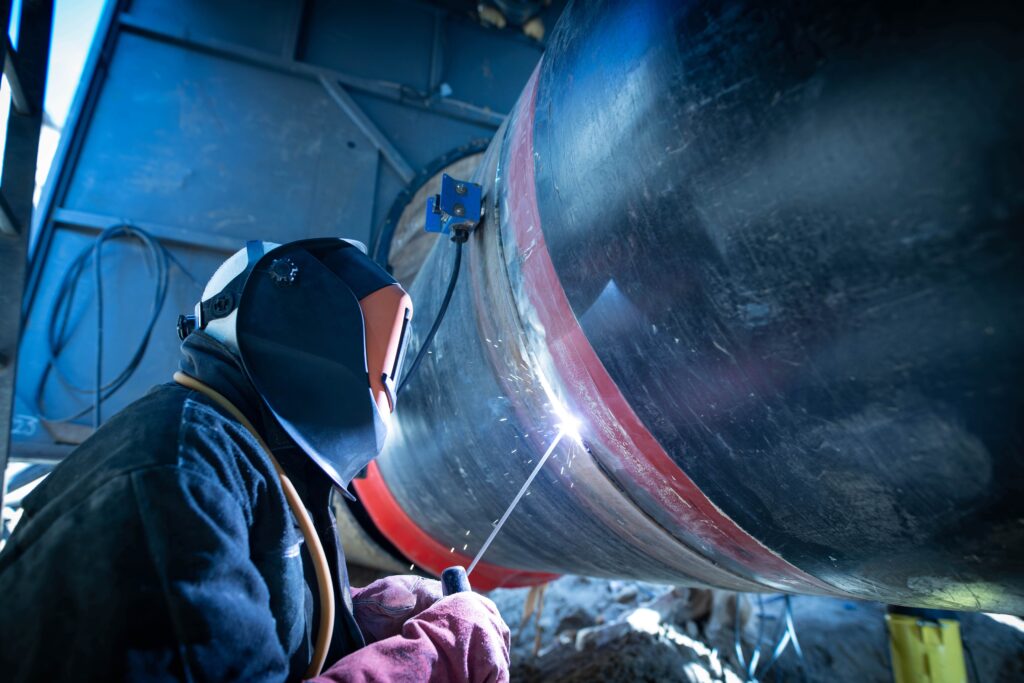
How Underwater Welding Works and Why It is So Challenging If you’ve ever wondered how massive ships, offshore platforms, and underwater pipelines are repaired without being brought to the surface, the answer lies in a fascinating process called underwater welding. It’s one of the most demanding and specialized skills in the diving industry, and for good reason. What Exactly Is Underwater Welding? Underwater welding is the process of joining metal parts while submerged in water, usually by trained commercial divers. It combines the principles of welding and diving into one highly technical profession.  The work is usually carried out to repair or maintain ships, oil rigs, harbor structures, bridges, and underwater pipelines. There are two main types of underwater welding: Wet Welding: The diver welds directly in the water using special waterproof electrodes. It’s faster and more flexible but comes with more challenges due to the direct contact with water. Dry (Hyperbaric) Welding: A sealed chamber or “habitat” is placed around the area to keep it dry. The environment is filled with gas (not water), allowing for a more controlled and high-quality weld,  but it’s expensive and complex to set up. How Does Welding Actually Work? In wet welding, the diver uses a power source above water that sends electric current through an insulated cable down to the welding electrode. When the electrode touches the metal, an electric arc forms, generating intense heat that melts both the electrode and the metal surface, fusing them together. To prevent the electric current from shocking the diver, the entire system is carefully insulated and grounded, and divers are trained to work within strict voltage and safety limits. In dry welding, a pressurized chamber is fixed around the part to be repaired. The water is displaced with gas (usually a helium-oxygen mix), and the diver works inside this dry environment wearing a welding mask. The result is a cleaner, stronger weld, often used for critical structures like oil rigs or subsea pipelines. Why Is Underwater Welding So Challenging? Underwater welding sounds cool, but it’s not easy. Here’s why it’s one of the toughest jobs out there: Water conducts electricity.Even with insulation, safety is a constant concern. Divers follow strict protocols to prevent electric shock. Visibility and stability are poor.Imagine welding in murky water with limited light, strong currents, and zero visibility, sometimes guided only by touch and experience. Pressure changes everything.At depth, pressure affects both the welder’s body and the equipment. Gases behave differently, and even the flame reacts in unpredictable ways. Metal behaves differently underwater.Cooling happens faster, which can cause cracking or weaker joints if not done properly. Welders must control heat precisely. It’s physically and mentally demanding.Divers often spend hours underwater in full gear, dealing with cold, fatigue, and the need for absolute focus. What It Takes to Become an Underwater Welder Being an underwater welder is not as simple as being someone who can just weld and swim. Those carrying out this job are highly trained commercial divers with certified welding skills. Most undergo months, maybe years, of training to understand not only the technical side but also physics, decompression, safety procedures, and emergency management. It’s a career that demands skill, discipline, and a love for challenges. But for those who master it, it’s one of the most rewarding jobs beneath the surface. Why It Matters Underwater welding plays a crucial role in keeping the world’s marine and offshore infrastructure running. From maintaining ship hulls and repairing pipelines to extending the life of underwater structures, it’s the unseen craft that keeps operations moving smoothly. At Abeedive Corp, for the last 60 years, we’ve seen firsthand how complex underwater repairs can be.That’s why we combine experienced divers, advanced equipment, and proven safety practices to get the job done right, no matter how deep or difficult.

Blog

How Divers Inspect and Maintain Underwater Pipelines

How Divers Inspect and Maintain Underwater Pipelines Pipelines are the lifelines of ports, refineries, offshore facilities, power plants, and other critical infrastructures.They carry oil, gas, and water across long stretches, quietly doing their job beneath the surface. But like everything underwater, they need constant care. Whether in seawater or freshwater, factors like corrosion, pressure, and time always take their toll on the pipelines. That’s why inspection and maintenance are so important.  Why Underwater Pipelines Need Inspection A pipeline that runs underwater faces challenges that land-based systems never deal with. Water movement can shift or unsettle the ground around it. Sediment can build up and hide sections that need attention. Corrosion, marine or biological growth, and changing pressures all take their toll over time. A small crack might not seem like much, but underwater, that can quickly turn into a serious problem. Regular inspection helps catch these issues early before they lead to leaks, contamination, or shutdowns. For critical lines like oil, gas, or cooling pipelines, preventive inspection is smart and essential.  How the Process Works Before any diver hits the water, a lot of careful planning goes into making sure the inspection is safe and thorough. Here’s how it happens: Plan the dive: Engineers map the pipeline, study drawings, and chart the exact route for the team. They check things like weather, tides, and water visibility to ensure everything is safe. Dive and inspect: Divers follow the pipeline, sometimes for hundreds of meters, using underwater cameras and measurement tools to spot corrosion, cracks, movement, or exposed sections. Small markers highlight areas needing a closer look later. Shallow water approach: In shallower stretches, divers handle the inspection directly. Deep or long stretches: For deeper or more extensive pipelines, ROVs (remotely operated vehicles) with cameras and sonar scanners record continuous footage and data for engineers to review on the surface. What Divers Look For  Inspecting a pipeline underwater should ideally be a routine check. But before diving into repairs, it must be a carefully planned operation where every detail matters. From studying the route and weather conditions to following the pipeline meter by meter with cameras and specialized tools, each step is designed to catch even the smallest issues before they turn into major problems.  Coating Damage: Protective layers keep metal safe from corrosion. Any scratch, peel, or wear is noted and addressed. Joint and Weld Integrity: Divers ensure joints are strong, with no rust, cracks, or bending. Support and Alignment: In tanks, channels, or plant installations, pipelines must stay properly supported. Shifts, sagging, or misalignment are corrected. Leaks or Fluid Escapes: Even a small drip, bubble, or seepage can indicate a pressure problem, crack, or faulty seal. All findings are recorded, photographed, and compiled into a report that becomes part of the pipeline’s maintenance history.  Maintenance and Repairs When damage is detected, divers can often carry out basic repairs immediately. They clean surfaces using brushes or high-pressure tools, remove scale, sediment, or debris, and apply protective coatings to prevent corrosion. If a more serious issue is found, like a dent, crack, or misaligned joint, the area is carefully marked. A specialized team may return later for underwater welding, patching, or replacement. Every action underwater is deliberate. The goal is to restore the structure while keeping it stable, safe, and operational. The work is precise, methodical, and relies heavily on teamwork. Safety and Coordination Diving around submerged pipelines or industrial structures involves working in tight spaces, with limited visibility and complex equipment. Safety is at the core of every dive. Key practices that are followed. Planning: Every dive is carefully planned. Depth, timing, and emergency procedures are set in advance. Standby Diver: Another diver is always ready to respond immediately if needed. Communication: Constant contact with the surface team keeps divers monitored and supported. Equipment Checks: All gear is tested before the dive, with redundancies for critical tools. Teamwork: Divers work closely with surface personnel, coordinating every move. Why It Matters Pipeline failures in submerged systems can lead to operational downtime, costly repairs, and safety hazards. Routine inspections catch problems early, preventing them from turning into major issues. It’s about being proactive and not waiting for things to fall apart. At Abeedive Corp, our divers and engineers have conducted inspections for steel plants, industrial tanks, power plants, and other submerged facilities across India and abroad for the last 60 years. Every job reinforces what experience teaches: careful attention to detail below the surface saves time, money, and effort above it.

Scroll to Top